
02.03.2026
We are proud to share that Keegans’ Jonathan Walker, Associate Fire Risk Assessor, has achieved both the ABBE Level 4 Diploma in Fire Risk Assessment and the IFE Level 3 Certificate in Fire Safety
Get in touch


Thank you for getting in touch. We will be in contact shortly.
The ABBE Level 4 Diploma is a nationally recognised, competence-based qualification that demonstrates Jonathan’s ability to undertake fire risk assessments independently, applying robust methodology, legislative understanding, and practical evaluation of life safety systems in real buildings. The IFE Level 3 Certificate further strengthens his technical foundation, evidencing a strong theoretical understanding of fire science, fire protection systems, and fire safety legislation.
These achievements reflect Jonathan’s continued professional development and our ongoing commitment at Keegans to delivering technically robust, compliant, and high-quality fire safety services to our clients.
Well done Jonathan; two fantastic achievements!
What is the Building Safety Act?
The BSA applies to all residential buildings that comprise of two or more properties and extends to residential care homes and Hospital accommodation. It requires that risk management measures must be taken to address potential building safety risks and reduce the severity of any incident, should it occur. Risks are defined as the spread of fire (including all forms of combustion, for example, smoke, fumes, and heat), or structural failure.
Act establishes the Health and Safety Executive as the Building Safety Regulator, to underpin the key regulatory reforms in the new building safety regime. The Building Safety Regulator will start to call in buildings for assessment and issue Building Assessment Certificates from April 2024. With a requirement to respond within 28 days, each building should have a building safety regime in place by this time. Compliance is achieved through the development of a Building Safety Case and a Building Safety Case Report.
What classifies a building as a high fire risk?
A high fire risk building in the UK is a building that is subject to more stringent regulations and oversight due to the potential consequences of a fire. The definition of a high fire risk building depends on whether the building is in the design and construction phase or the occupation phase.
According to the Building Safety Act 2022 and the Higher-Risk Buildings (Descriptions and Supplementary Provisions) Regulations 2023.
A high fire risk building during the design and construction phase is a building that is at least 18 metres in height or has at least seven storeys and contains at least two residential units, a care home, or a hospital. However, some buildings are excluded from this definition, such as secure residential institutions, hotels, and military barracks.
A high fire risk building during the occupation phase is a building that is at least 18 metres in height or has at least seven storeys and contains at least two residential units. This definition excludes buildings that are regulated as workplaces under the Fire Safety Order, such as care homes, hospitals, secure residential institutions, hotels, and military barracks.
What steps are involved in a fire risk assessment?
A fire risk assessment involves five steps:
 See more

02.02.2026
Keegans Leadership Update | Seamus Carroll Promoted to DirectorSeamus has been promoted to Director of our Cost Consultancy and Employer's Agent Division!
See more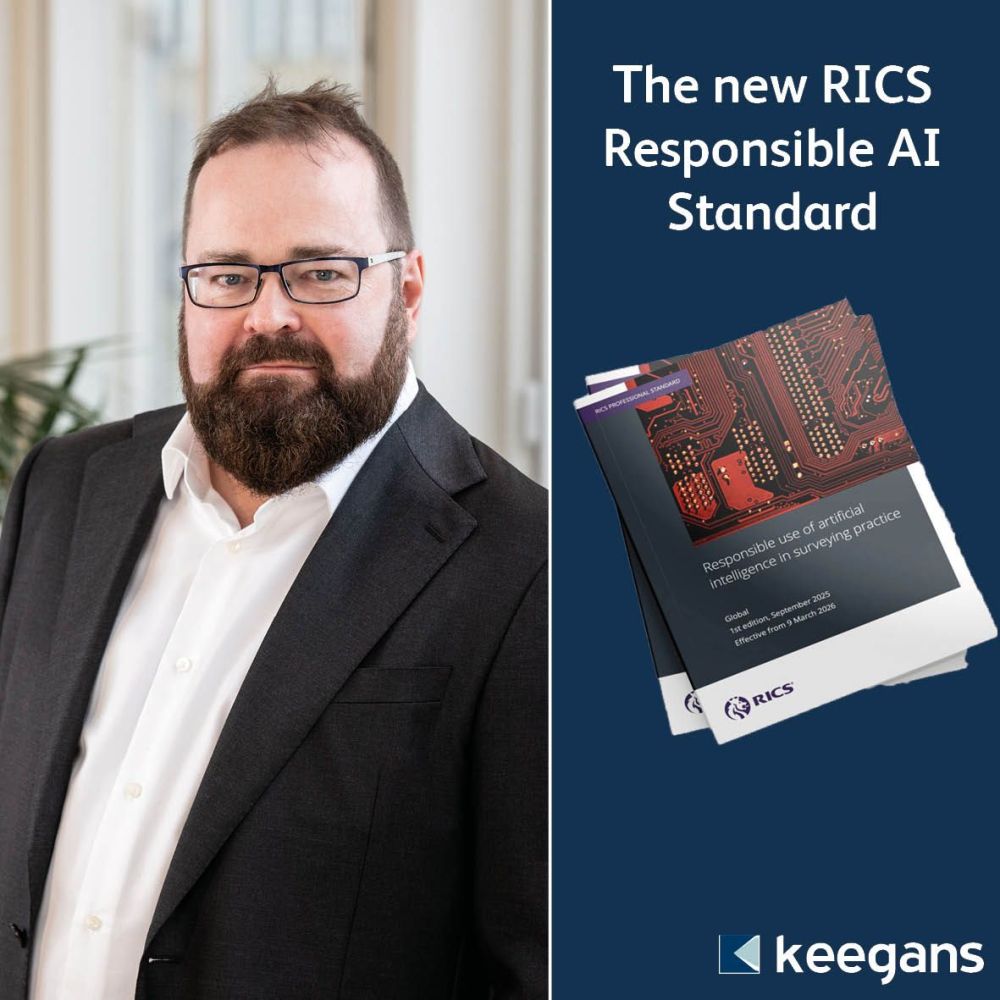
10.03.2026
RICS Responsible AI Standard Comes Into Force: What It Means for Surveying and ConstructionSeamus Carroll, Director of Cost Consultancy, explains what the new RICS Professional Standard on the Responsible Use of AI in Surveying Practice means for firms, governance and the future of the profession.
Get in touch
Thank you for getting in touch. We will be in contact shortly.